Grade 4 · Week 13verb tenses
Harvest Day at the School Garden
Students read a short narrative about a fourth grade class's garden harvest, then answer five questions identifying and applying past, present, future, and perfect verb tenses.
On screen - your kid, alone
- 1Day 1 - Meet the story
- 2Day 2 - Word work
- 3Day 3 - What it means
- 4Day 4 - Fix & re-read
- 5Day 5 - Show what you know
Offline - with you
Print the pages for offline work together; the answer key is for you.
Sit beside your child and read the garden passage aloud together, then explain that English verbs change shape to show *when* something happens — past, present, future, or "perfect" tenses that link two time periods. Ask your child to point to one verb on each line of the passage and say when the action happens: already done, happening now, going to happen, or finished before another moment. Strong answers will sound like, "'Had planted' is past perfect because it happened before another past event — before June came," or "'Will have donated' is future perfect because the donating finishes before Friday afternoon." After the passage, work through the five questions together and ask your child to explain *why* each answer fits, not just which one is correct. If your child gets stuck on the perfect tenses, draw a simple timeline with arrows: one dot for "now," one for the past event, one for the future deadline, and place each verb on the line so the order becomes visible. Celebrate careful thinking over speed, and reread any sentence where the tense feels tricky — hearing it twice often makes the time clue click.
Harvest Day at the School Garden
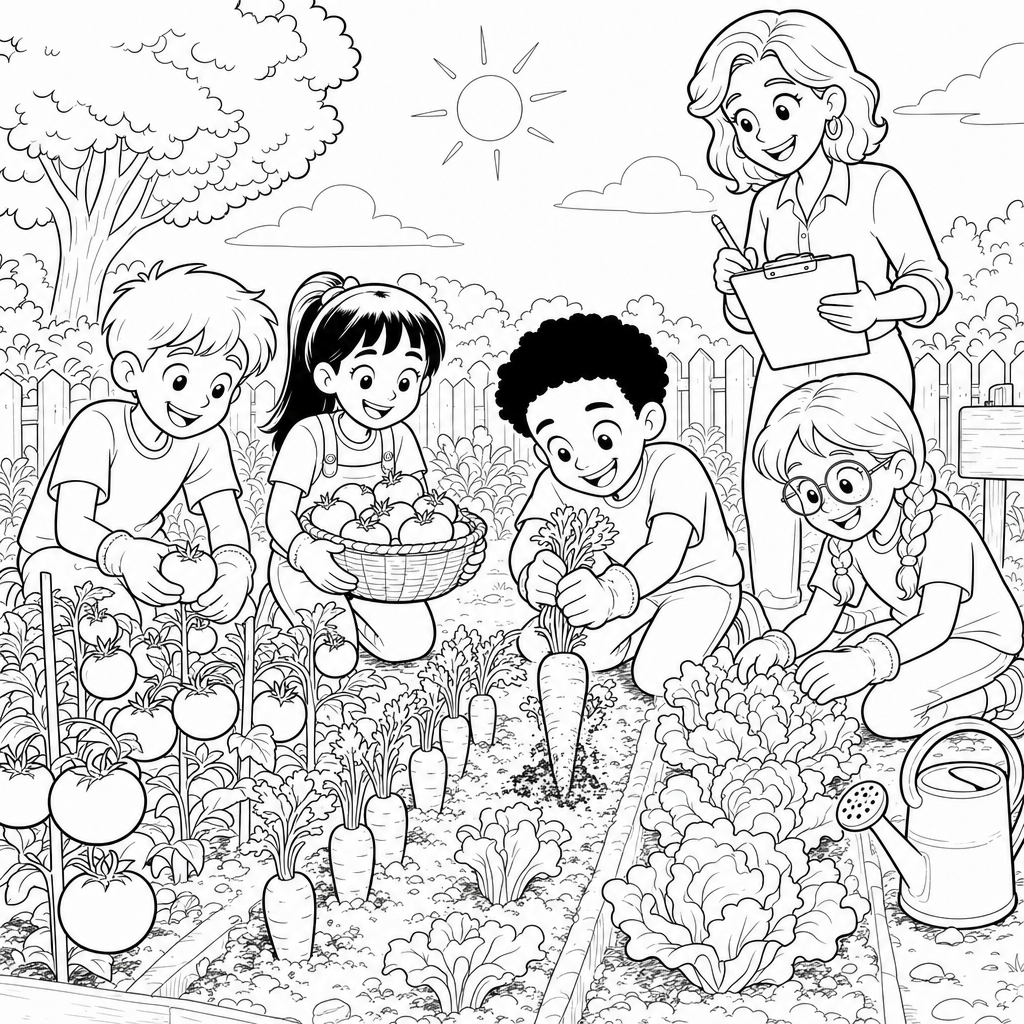
Mr. Alvarez's fourth grade class planted the school garden in early spring. The students dug rows in the soft soil. They tucked tiny seeds into the dirt. Priya watered the carrot bed every Monday. Marcus pulled weeds from around the tomato plants. Lin checked the bean vines for hungry bugs. By June, the garden had grown into a green, leafy patch. Today is Thursday, and the class harvests vegetables for the community food pantry. The students wear gloves and carry wide baskets. Mr. Alvarez smiles as he hands out garden shears. "We pick the ripe vegetables first," he reminds the class. Priya snips fat carrots from the dark earth. Marcus twists red tomatoes off their stems with careful fingers. Lin gently tugs green beans from the tall vines. The baskets fill up quickly with bright, fresh produce. Before lunch, the class has already filled six big baskets. They have weighed each basket on the old kitchen scale. Priya has counted forty-two carrots, and Marcus has stacked thirty tomatoes in neat rows. The students feel proud of their hard work. Mr. Alvarez tells them that the garden has produced more food than last year. "Last spring, we had planted only half this many seeds," he explains. "That is why this harvest feels so huge." Tomorrow, the class will deliver the baskets to the community food pantry on Oak Street. Mr. Alvarez will drive the school van down the quiet road. The students will carry the heavy baskets inside the pantry. Volunteers will sort the vegetables onto the wooden shelves. Families in the neighborhood will choose fresh food for their dinners. Priya will hand out small bunches of fresh herbs at the door. By Friday afternoon, the students will have donated over eighty pounds of vegetables. They will have shared the work of their hands with many hungry families. Mr. Alvarez will have thanked every student for their effort. The garden bed will sit quiet and empty after the harvest. Still, the class already plans for the fall planting season. Lin has saved seeds from the biggest pumpkin for next year. Marcus has written notes about which plants grew the best. The school garden has taught them how patience and teamwork feed a whole community.
What this lesson checks
- Grammar usage: Read this sentence from the passage: "Mr. Alvarez's fourth grade class planted the school garden in early spring." Which verb tense is used in this sentence?
- Grammar usage: The sentence below is in the simple past tense. Rewrite it in the present perfect tense (has/have + past participle) so it shows that the action started in the past and connects to right now. Lin checked the bean vines for hungry bugs.
- Grammar usage: Which sentence correctly uses the present perfect tense?
- Grammar usage: Read this sentence with a blank: "Tomorrow, the class _____ the baskets to the community food pantry on Oak Street." Which verb form correctly completes the sentence in the simple future tense?
- Grammar usage: The sentence below uses the simple present tense. Rewrite it in the future perfect tense (will have + past participle) so it shows an action that will be finished before a future time. Before the bell rings, Marcus weighs all the baskets.