Grade 4 · Week 2text structure
The School Recycling Program
Students read an informational passage about a school recycling program and answer five questions identifying text structures, signal words, and how organization helps readers understand information.
On screen - your kid, alone
- 1Day 1 - Meet the story
- 2Day 2 - Word work
- 3Day 3 - What it means
- 4Day 4 - Fix & re-read
- 5Day 5 - Show what you know
Offline - with you
Print the pages for offline work together; the answer key is for you.
Start by reading the passage aloud together, then tell your child that good informational writers organize their ideas in different patterns — like solving a problem, telling steps in order, showing causes and effects, or comparing two things. Ask your child to read each paragraph again and underline signal words such as "first," "because," "as a result," "unlike," and "both," then talk about what those words tell us about how the paragraph is built. A strong answer connects specific signal words or sentences to a structure name and explains why the author chose it — for example, "Paragraph 2 uses sequence because the words first, next, then, and finally show the order the class did things." If your child gets stuck, try covering three of the paragraphs and focusing on just one at a time, or ask guiding questions like "Is the author telling you steps, or showing what changed because of something?" You can extend the lesson by asking your child to write one short paragraph about their own day using a structure they choose, then having you guess which structure they used. Celebrate noticing — recognizing how a text is built is a big reading skill, and it gets easier every time they practice.
The School Recycling Program
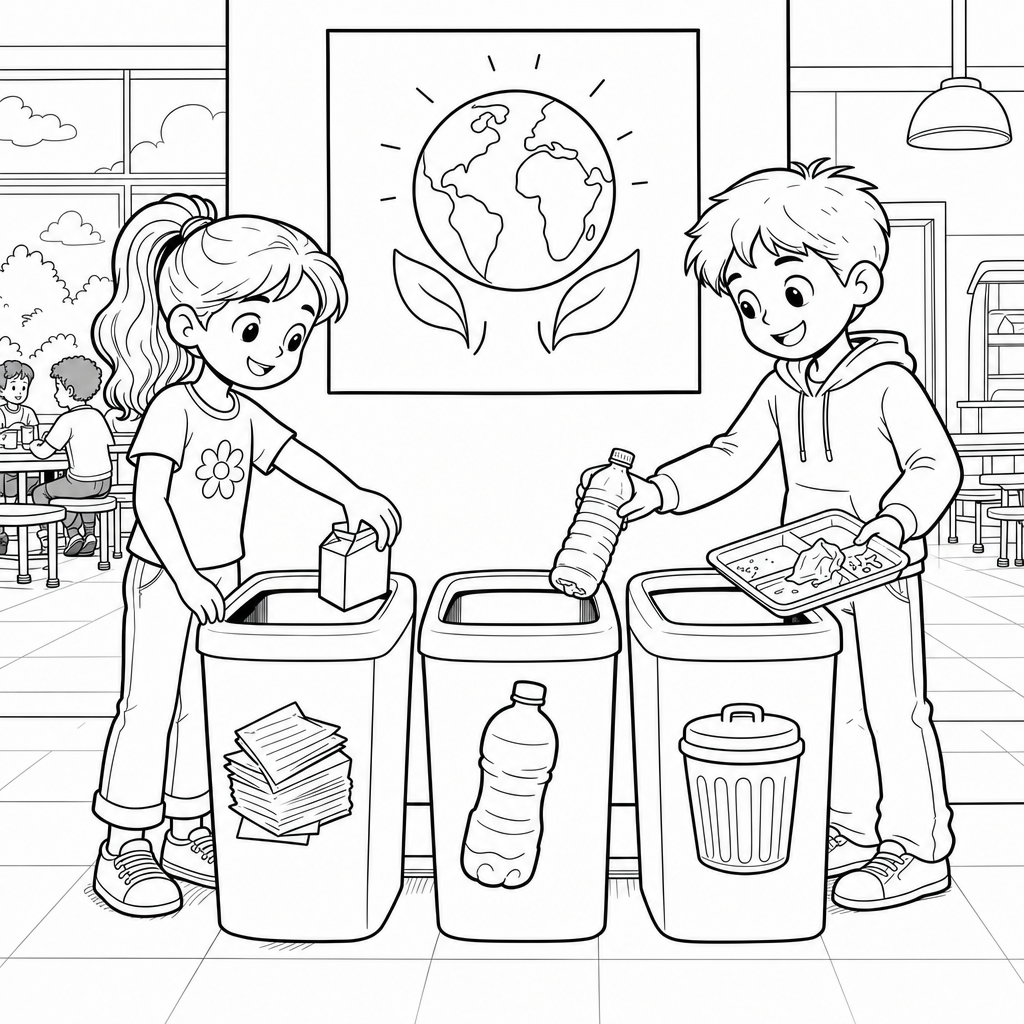
Last fall, the fourth graders at Maple Street Elementary noticed a big problem in the cafeteria. The trash cans were full by lunchtime. Milk cartons, paper trays, and plastic bottles spilled onto the floor. The custodians had to empty the cans three times a day. Mrs. Patel's class felt the school was wasting things that could be used again. So the students brought their idea to Principal Ruiz. They asked if the school could start a recycling program. He smiled and said it was a perfect plan. The class got busy right away. First, they counted how many bottles and cartons were thrown out each day for a week. Next, they made colorful posters to teach other students what could be recycled. Then, they set up three bins in the cafeteria. One bin was for paper, one was for plastic, and one was for cans. Finally, on a sunny Monday morning, the new program began. Students lined up to sort their trash for the very first time. The program worked better than anyone had hoped. Because students sorted their waste, the trash cans were no longer overflowing. As a result, the custodians had more time to help with other jobs. The cafeteria also smelled fresher and looked much cleaner. Teachers noticed that kids were proud of their work, therefore more classes wanted to join in. The town even sent a thank-you letter to the school. The principal hung it on the office wall for everyone to see. The cafeteria today looks very different from the way it looked before. Before the program, trash was everywhere, and the floor was often sticky. Now, the bins are neat, and the tables stay tidy. Sorting paper and plastic is not exactly the same, however. Both kinds of materials must be clean, but paper cannot get wet, while plastic can be rinsed in the sink. Unlike paper, plastic bottles need their caps removed. Similarly, both bins must be checked so that no contaminated items ruin the load. Thanks to the fourth graders, Maple Street Elementary is now a cleaner and greener school.
What this lesson checks
- Main idea: Which text structure does the second paragraph use to organize information?
- Main idea: Which signal words in the third paragraph help the reader know it uses a cause and effect structure?
- Main idea: How is the fourth paragraph organized differently from the second paragraph?
- Main idea: The first paragraph describes a problem in the cafeteria and then tells how the students offered a way to fix it. Why is this problem and solution structure helpful for the reader?
- Main idea: The author chose to organize the whole article using four different text structures instead of just one. Pick ONE of the four paragraphs and explain how its text structure helps the reader understand that part of the story better than another structure would. Use specific words or details from the paragraph you choose.