Grade 4 · Week 1Main idea
Our School's Recycling Program
Students read an informational passage about Lincoln Elementary's recycling program, then answer five questions identifying main ideas and supporting details, with teacher and homeschool guidance.
On screen - your kid, alone
- 1Day 1 - Meet the story
- 2Day 2 - Word work
- 3Day 3 - What it means
- 4Day 4 - Fix & re-read
- 5Day 5 - Show what you know
Offline - with you
Print the pages for offline work together; the answer key is for you.
Start by telling your child that the passage describes a real program at a school, and their job is to figure out the *big idea* the writer wants them to take away — not just to list facts. After reading together, ask, "If a friend asked what this whole article is about in one sentence, what would you say?" A strong answer will mention fourth graders running a recycling program that helps the whole school reduce waste — not just one detail like the yellow vests or the 42 pounds of paper. For each paragraph, ask what it is *mostly* about, and remind your child that the main idea is usually bigger than any single sentence in the paragraph. If your child struggles, try covering the paragraph and asking them to recall it from memory; whatever they remember first is often close to the main idea. You can also play a "main idea vs. detail" sorting game by reading a sentence aloud and asking, "Is that the big point, or is that an example that supports the big point?"
Our School's Recycling Program
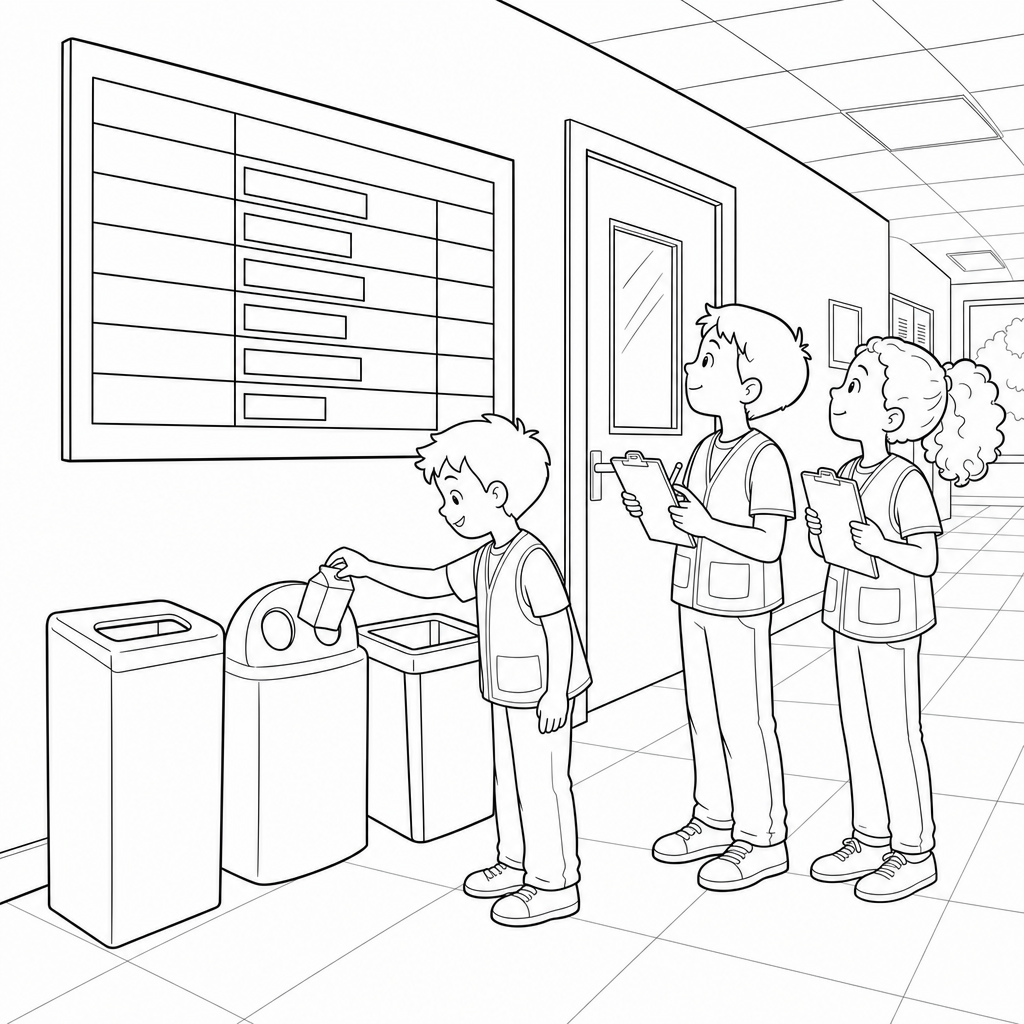
Lincoln Elementary started a new recycling program this fall. Fourth graders run it during their lunch period. The school has three new bins in the cafeteria. The blue bin is for paper. The green bin is for plastic bottles and cans. The black bin is for trash that cannot be recycled. Mrs. Patel, the fourth grade teacher, helped set up the program. She wanted students to take charge and learn real skills. Every day at lunch, four fourth graders work as bin helpers. They wear bright yellow vests so other kids can spot them. The helpers stand near the bins and show students where each item should go. Milk cartons go in the green bin. Used napkins go in the black bin. Notebook paper goes in the blue bin. At first, many kids made mistakes. Now most students sort their lunch trash the right way. The helpers switch jobs each week so everyone gets a turn. The class also keeps track of how much they collect. A big chart hangs in the hallway near the office. Each Friday, the helpers weigh the bins on a small scale. Then they write the totals on the chart with a marker. Last week, the school collected 42 pounds of paper and 18 pounds of plastic. The week before, they collected 39 pounds of paper. The chart shows that the totals keep going up. Parents and teachers stop to read it when they walk by. The fourth graders do more than just sort bins. They also visit the younger classes to teach them about recycling. Each Tuesday, two students go to a first or second grade room. They bring a poster and a few sample items. They show the little kids which bin to use and answer questions. The fourth graders also read short announcements over the speaker each morning. The announcements remind everyone to reduce waste, like taking only one napkin at lunch. Some classes have started a contest to see who can throw away the least food. Thanks to these lessons, even the youngest students at Lincoln are learning how to help. The whole school is working as a team to keep trash out of the dumpster and send less waste to the landfill each week.
What this lesson checks
- Main idea: What is the main idea of the whole passage?
- Supporting detail: According to the passage, how do the bin helpers keep track of how much the school recycles each week?
- Main idea: The main idea of the passage is that Lincoln Elementary's fourth graders run a recycling program that helps the whole school cut down on waste. Use details from the passage to explain how the fourth graders make this happen. Include at least two details and tell how those details support the main idea.
- Text evidence: The third paragraph is mostly about how the fourth graders track how much the school recycles each week. Find TWO sentences from that paragraph that show this. Copy each sentence exactly as it appears in the passage.
- Text evidence: Look closely at the fourth paragraph. What is the main idea of that paragraph, and how is it different from the main idea of the whole passage? Use at least two details from the fourth paragraph to support your answer.