Grade 3 · Week 12verb tenses
The Class Garden Harvest
Students read a garden story and practice forming and identifying simple past, simple present, and simple future verb tenses.
On screen - your kid, alone
- 1Day 1 - Meet the story
- 2Day 2 - Word work
- 3Day 3 - What it means
- 4Day 4 - Fix & re-read
- 5Day 5 - Show what you know
Offline - with you
Print the pages for offline work together; the answer key is for you.
Read the passage and sort actions into before now, now or regularly, and later. Practice planted, plant, will plant and the irregular forms grew, grow, will grow. Ask your child to use the time clues last spring, today, and tomorrow to explain each choice.
The Class Garden Harvest
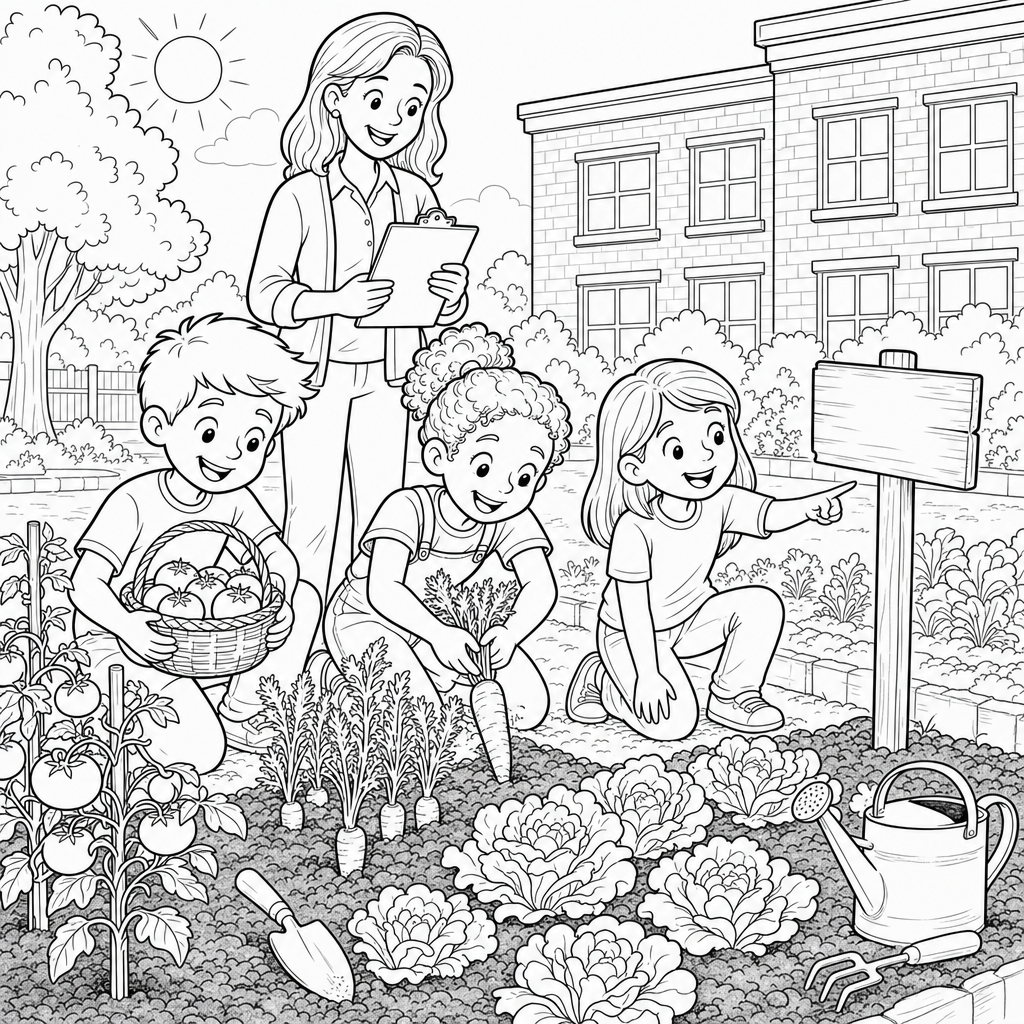
Last spring, Mr. Alvarez's third-grade class planted a garden behind the school. We dug holes, dropped in tiny seeds, and watered the soil every afternoon. Sara planted carrots, while Jamal and I planted bright green peppers. For weeks, we waited and watched for the first sprout. By June, our seeds grew into strong young plants with thick leaves. Today is harvest day, and the vegetables look bigger than anyone expected. I pick a fat red tomato and place it gently in my basket. Sara pulls orange carrots from the dirt, and Jamal twists ripe peppers off their stems. The whole class works together, laughs, and compares what we find. Mr. Alvarez smiles because we learned so much since April. He reminds us that good gardeners observe their plants carefully and stay patient. Tomorrow, we will cook a special lunch with everything we harvested. Mr. Alvarez will bring a giant pot, and parents will help us chop vegetables safely. We will make vegetable soup and fresh salsa. Sara will write the recipe cards, and Jamal will design the menu. By the end of the day, we will finish our biggest garden project yet. Next spring, our class will plant even more vegetables in the schoolyard.
What this lesson checks
- Grammar usage: The word "Tomorrow" tells when the action will happen. Which verb phrase correctly completes this sentence? "Tomorrow, our class ___ a special lunch."
- Grammar usage: The sentence below uses the wrong verb tense. The word 'Tomorrow' tells us the action happens in the future. Rewrite the sentence so the verb is in the future tense. Tomorrow, we cooked a special lunch with everything we harvested.
- Grammar usage: Which sentence uses the simple past tense and an irregular verb to tell what happened before now?
- Grammar usage: Read this sentence: "Today, Sara ___ orange carrots from the dirt." Which verb correctly completes the sentence in the simple present tense?
- Grammar usage: The sentence below mixes up verb tenses. The word 'Today' tells us the action is happening now, but the verb is in the past tense. Rewrite the sentence so the verb is in the simple present tense. Then explain in 2-4 sentences how you knew which tense to use, using clues from the passage. Today, Sara pulled orange carrots from the dirt.