Grade 3 · Week 4text structure
The School Garden Cleanup
Students read an informational passage about a class garden cleanup, then answer five questions identifying problem/solution, sequence, and cause/effect structures with teacher and homeschool guidance included.
On screen - your kid, alone
- 1Day 1 - Meet the story
- 2Day 2 - Word work
- 3Day 3 - What it means
- 4Day 4 - Fix & re-read
- 5Day 5 - Show what you know
Offline - with you
Print the pages for offline work together; the answer key is for you.
Start by reading the passage aloud together, then ask your child, "What big problem did the class have, and how did they solve it?" A strong answer names the problem (the garden was overgrown with weeds and trash, and the tomato plants died) and explains the solution (the class made a two-week plan with clear steps to clean and replant the garden). Next, point to the middle paragraph and ask which signal words show the order of steps — listen for "first," "next," "then," and "finally." You can also ask about cause and effect: "Why did the new seeds grow?" A good answer connects the cleanup and compost to the healthy new shoots. If your child struggles, reread one paragraph at a time and underline signal words together, then have them retell that section in their own words before moving on.
The School Garden Cleanup
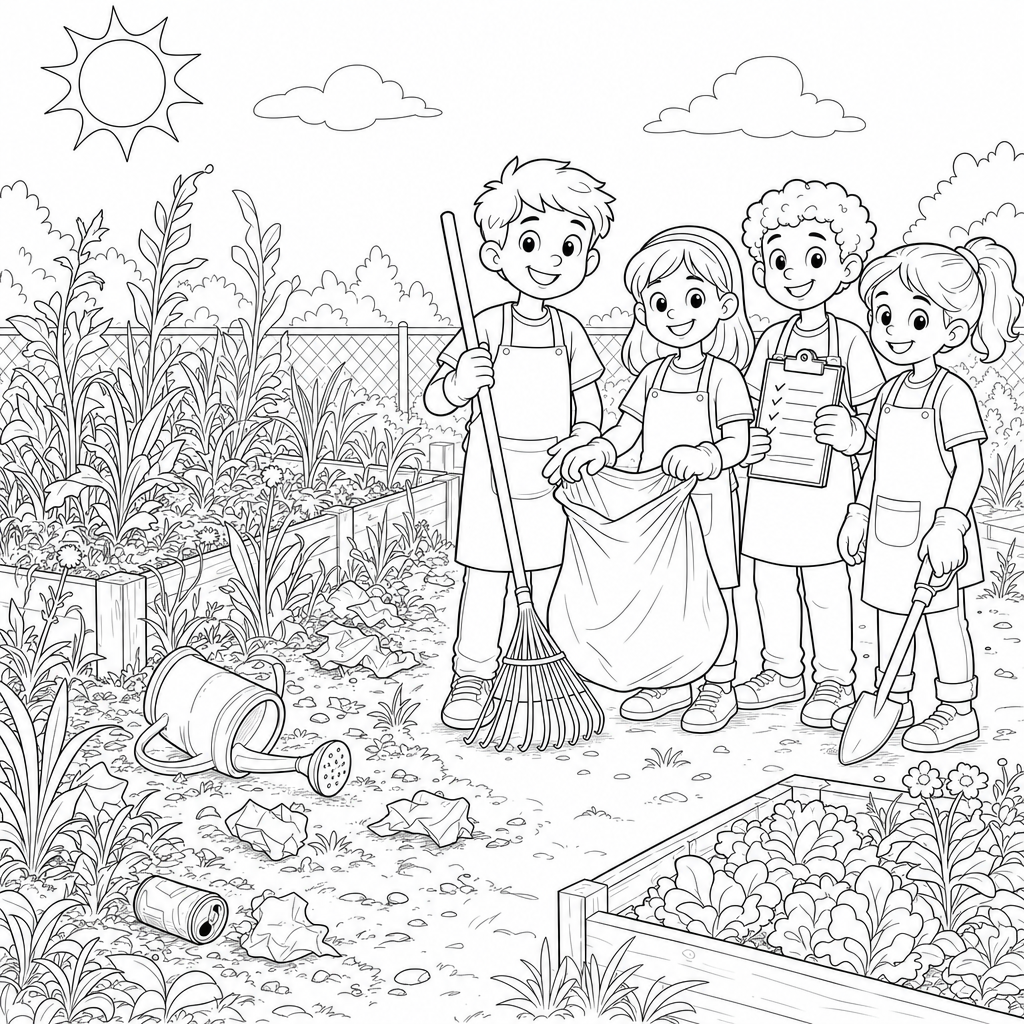
Mr. Diaz's third-grade class had a big problem. The school garden behind Room 12 was a mess. Tall weeds covered the vegetable beds, and trash blew across the dirt. Because the weeds took the sunlight and water, the young tomato plants had died. The students wanted to fix the garden, but they were not sure where to start. After talking together, they decided to plan a cleanup project that would last two weeks. The class followed clear steps to solve the problem. First, the students made a list of tools they needed, like gloves, rakes, and trash bags. Next, they split into three teams. One team pulled weeds, one team picked up litter, and the last team added compost, which is rich soil made from old food and leaves. Then, they spread mulch, a layer of wood chips that keeps weeds from growing back. Finally, the class planted new seeds for lettuce, carrots, and beans. The results showed why their hard work mattered. Because the weeds were gone, sunlight could reach the soil again. The compost gave the seeds the nutrients they needed to grow strong. Within a week, tiny green shoots pushed through the dirt. Students checked the garden every morning, and they watered it when the soil felt dry. As a result, the garden looked healthy and full of life. Mr. Diaz's class learned that a messy garden could be saved with a good plan. By spotting the problem, following careful steps, and understanding how each action caused a change, the third graders turned a weedy patch into a place where vegetables could finally grow.
What this lesson checks
- Main idea: What is the overall text structure of this passage?
- Main idea: Read this part of the passage: 'First, the students made a list of tools they needed, like gloves, rakes, and trash bags. Next, they split into three teams.' What text structure does this section use?
- Main idea: Which signal words from the passage help the reader see a cause-and-effect relationship?
- Main idea: How does the problem-and-solution structure help readers understand this passage?
- Main idea: The author uses more than one text structure in this passage. Choose ONE section that uses sequence OR cause-and-effect. Name the structure, and use 2-4 sentences to explain how you know. Include at least one signal word or detail from the passage as evidence.