Grade 3 · Extra practiceinformative paragraph
Our Classroom Compost Bin
Students read a model paragraph about a classroom compost bin, identify its topic sentence and key facts, then plan and write their own informative paragraph using teacher and homeschool support.
Offline - with you
Print the pages for offline work together; the answer key is for you.
Sit beside your child and read the paragraph about the compost bin together, then say something like, "A good informative paragraph tells facts about one topic. Let's find the sentence that tells us what the whole paragraph is about, then count the facts the writer shared." A strong answer will point to the first sentence as the topic sentence and list real facts from the passage, such as what scraps go in, what stays out, how worms and water help things break down, and how the soil feeds the garden. When it is time to plan and write a new paragraph, pick one school topic your child knows well, like caring for a pet or sorting the recycling, and have them jot down a topic sentence, three facts, and a closing sentence before writing full sentences. A good final paragraph will stick to one topic, share true facts instead of opinions, and end with a sentence that wraps the idea up. If your child gets stuck, offer sentence starters such as "Our class has...", "First, we...", "Next,...", and "This helps because..." and let them say their ideas out loud before writing them down. If the writing feels too hard, shrink the goal to three sentences (topic, one fact, closing) and build up from there on another day.
Our Classroom Compost Bin
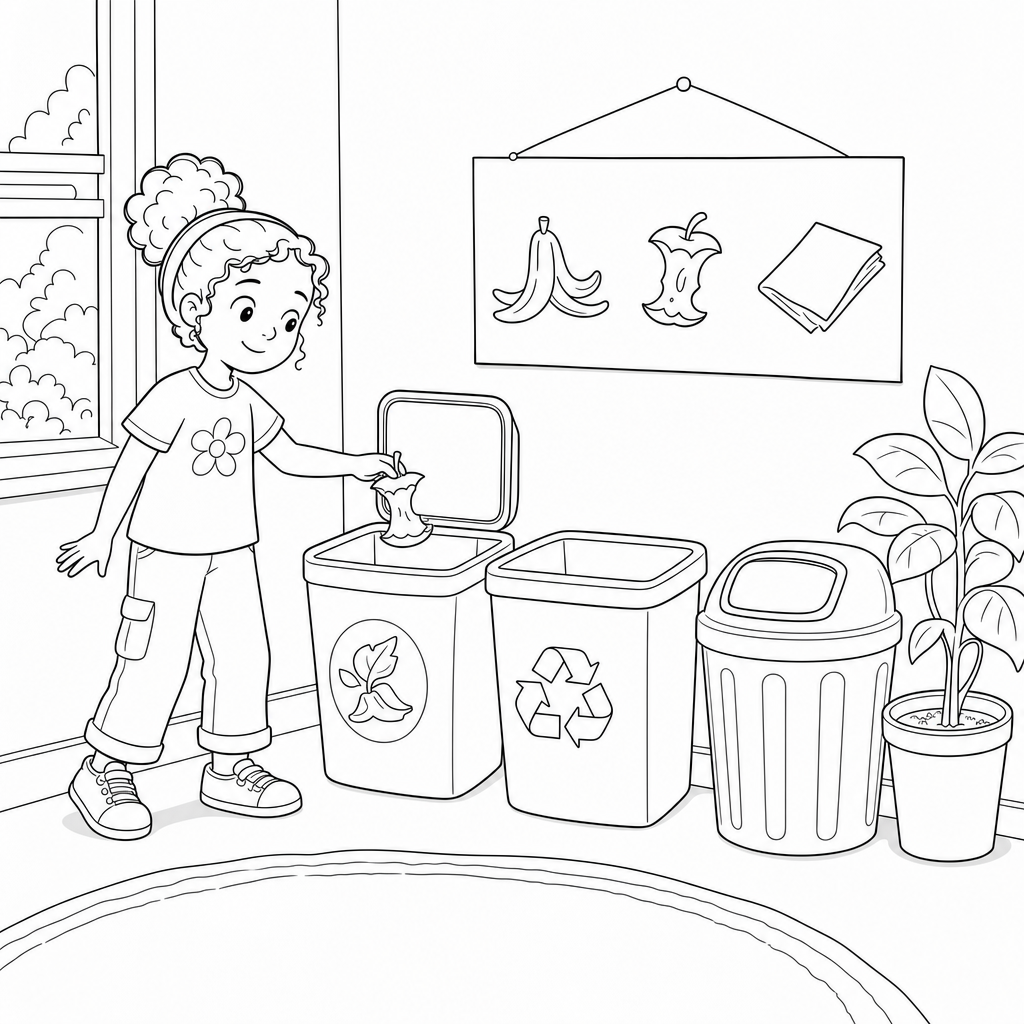
Our class has a compost bin in the back of the room. A compost bin is a box where food scraps turn into rich soil. Ms. Patel set ours up so we could help the school garden grow. Each day, we save the parts of our lunch that plants can use later. After we eat, we drop the right scraps in the bin. We add apple cores, banana peels, orange rinds, and carrot tops. We do not add meat, cheese, milk, or plastic wrappers. Those things can smell bad or hurt the soil. A poster on the wall shows us what is safe to toss in. Next, tiny bugs and worms get to work inside the bin. They help the scraps decompose, which means break down into small bits. Air and water help them, so we stir the pile and add a little water each week. Slowly, the old peels and cores turn dark and crumbly. After about two months, the scraps look like soft, brown dirt. Then our class carries the fresh soil out to the school garden. We mix it into the beds where we plant beans, lettuce, and sunflowers. The compost gives the plants food, so they grow tall and strong. It also helps the soil hold water on hot, sunny days. Best of all, our bin keeps food waste out of the trash can. A full trash bag means more garbage at the dump. Our small bin shows how third graders can take care of the earth. Even apple cores and banana peels can become something useful.
What this lesson checks
- Writing plan: The model paragraph ends with, "Even apple cores and banana peels can become something useful." Pretend you are the writer and you want to keep going. Write 2-3 more sentences that continue the paragraph in the same explaining voice. Add one more fact about the compost bin, such as how the class checks on it, who helps with it, or what the class plans to grow next with the new soil.
- Writing plan: Now it is your turn to explain something at school! Pretend you are writing an informative paragraph about the classroom recycling bin. Write 2-3 sentences that teach the reader what goes in the bin and what does not. Use the same explaining voice as the model paragraph (clear facts, no opinions). You can start with: "Our class has a recycling bin near the door."
- Writing plan: An informative paragraph often gives a number or amount to help readers picture a fact. Look at the model paragraph about the compost bin. It tells what goes in, what stays out, and what happens to the scraps, but it could use one more sentence with a NUMBER fact. Write ONE new sentence to add to the model that includes a number. For example, you could tell how many students help, how many times a week the class stirs the bin, or how many scraps go in each day. Use the same explaining voice (a clear fact, no opinions).
- Writing plan: A student wrote this weak draft about the classroom compost bin: "The compost bin is cool. We put stuff in it." This draft does not teach the reader anything. It uses an opinion word ("cool") and the word "stuff" is too fuzzy. Look at how the model paragraph names EXACT foods that go in the bin (apple cores, banana peels, orange rinds, and carrot tops). Revise the weak draft into 2 sentences. Take out the opinion word and use clear facts with exact examples, like the model does.