Grade 3 · Week 15figurative language
The School Garden Harvest
Students read a short narrative about a class garden harvest, identify and interpret five examples of figurative language, and answer five questions with teacher and homeschool support.
On screen - your kid, alone
- 1Day 1 - Meet the story
- 2Day 2 - Word work
- 3Day 3 - What it means
- 4Day 4 - Fix & re-read
- 5Day 5 - Show what you know
Offline - with you
Print the pages for offline work together; the answer key is for you.
Read the story aloud together first, then tell your child, "Authors sometimes describe things in playful ways instead of plain ways. Let's hunt for spots where the words paint a picture." As you reread, pause at lines like "the sun smiled down," "tall sunflowers nodded their heads," "red tomatoes were little suns," "as orange as a pumpkin," and "hungry as bears," and ask what your child pictures in their mind. A strong answer connects the phrase to a real meaning and points to a clue from the story—for example, "Hungry as bears means very, very hungry, because they worked all morning in the garden." If your child gives a literal answer (like saying the sun has a real mouth), gently ask, "Can the sun really smile? What might the author mean instead?" and guide them to think about how the day feels warm and cheerful. End by inviting your child to make up one new comparison about something in your home, which shows they understand how figurative language works.
The School Garden Harvest
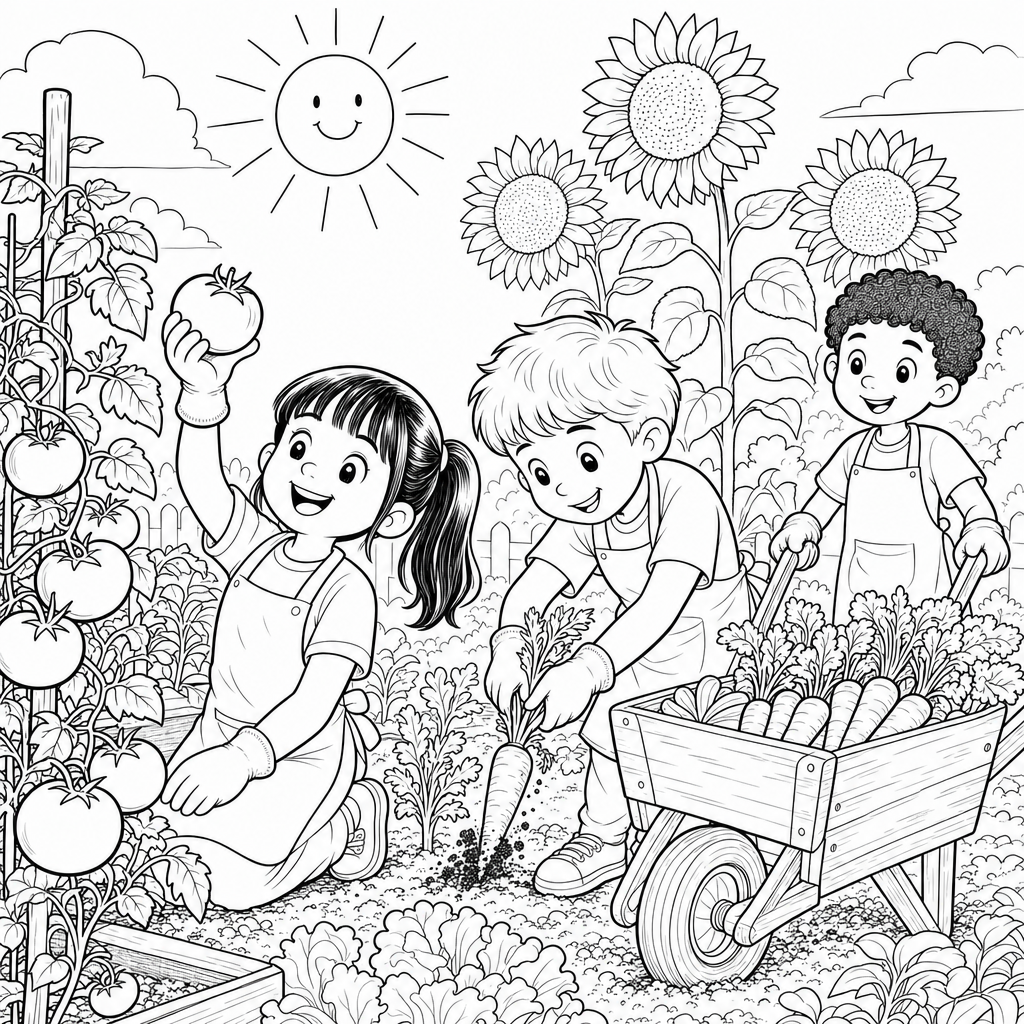
Friday morning, the sun smiled down on Mr. Ortega's class. The third graders ran outside with baskets and gloves. Today they would pick food for the neighborhood pantry. The garden was waiting for them. Tall sunflowers nodded their heads in the breeze, as if saying hello. Maya pulled a fat carrot from the soil. "This carrot is as orange as a pumpkin!" she said. She held it up so the whole class could see. Diego knelt by the tomato plants. The red tomatoes were little suns hanging from green vines. He picked one and placed it gently in his basket. "Be careful," Mr. Ortega said. "Tomatoes bruise easily." Next to Diego, Sam tried to pull a stubborn carrot. He tugged and tugged, but it would not budge. His face turned pink. "This carrot does not want to leave home," he groaned. Maya laughed and helped him pull. Out it came at last, with dirt clinging to its roots. By lunchtime, the baskets were full. The children had worked hard, and they were hungry as bears. Mr. Ortega smiled at his class. "You are the best helpers in the city," he said. "The families at the pantry will be so thankful." They loaded the baskets into Mr. Ortega's truck. Maya looked back at the empty garden. The sunflowers swayed, waving goodbye to the class. She felt proud and warm inside. Sharing food with neighbors felt like sharing a hug. Next week, they would plant new seeds. For now, the harvest was ready to travel to people who needed it most.
What this lesson checks
- Word meaning: Read this sentence from the story: "The red tomatoes were little suns hanging from green vines." What does this sentence most likely MEAN?
- Word meaning: At the end of the story, the author writes, "The sunflowers swayed, waving goodbye to the class." Why does the author describe the sunflowers this way?
- Word meaning: The story says the children "were hungry as bears." What does this phrase mean?
- Word meaning: Which phrase from the story uses figurative language to compare two things using the word "as"?
- Text evidence: In the story, Sam has trouble pulling a carrot out of the ground. Sam says, "This carrot does not want to leave home." In 2-3 sentences, explain what Sam really means by this and why it is an example of figurative language. (A carrot cannot really want anything!)