Grade 3 · Week 13capitalization punctuation
The Lost Dog Flyer
Students read a short story about Maya helping Mr. Alvarez fix his lost dog flyer, then answer five questions about capitalization and end marks.
On screen - your kid, alone
- 1Day 1 - Meet the story
- 2Day 2 - Word work
- 3Day 3 - What it means
- 4Day 4 - Fix & re-read
- 5Day 5 - Show what you know
Offline - with you
Print the pages for offline work together; the answer key is for you.
Sit next to your child and read the story about Maya and Mr. Alvarez together, then look at the rough-draft flyer side by side so you can hunt for mistakes as a team. Say something like, "A flyer has to look careful, just like Maya said. Let's find every name that needs a capital and every sentence that is missing its end mark." A strong answer will name the exact word that needs fixing (such as "Biscuit" or "Saturday") and explain why — names of people, pets, days, and streets are proper nouns, so they always start with a capital letter. For end marks, listen for your child to match the punctuation to the job of the sentence: a period for a telling sentence, a question mark when the sentence asks something, and an exclamation point when the sentence shows strong feeling like "Please call right away!" If your child gets stuck, read the sentence out loud with extra feeling and ask, "Did that sound like a question, a telling sentence, or something exciting?" — your voice will often give the answer away. For tricky capitals, try covering the word and asking, "Is this the special name of one certain person, place, or pet?" If yes, it needs a capital every time.
The Lost Dog Flyer
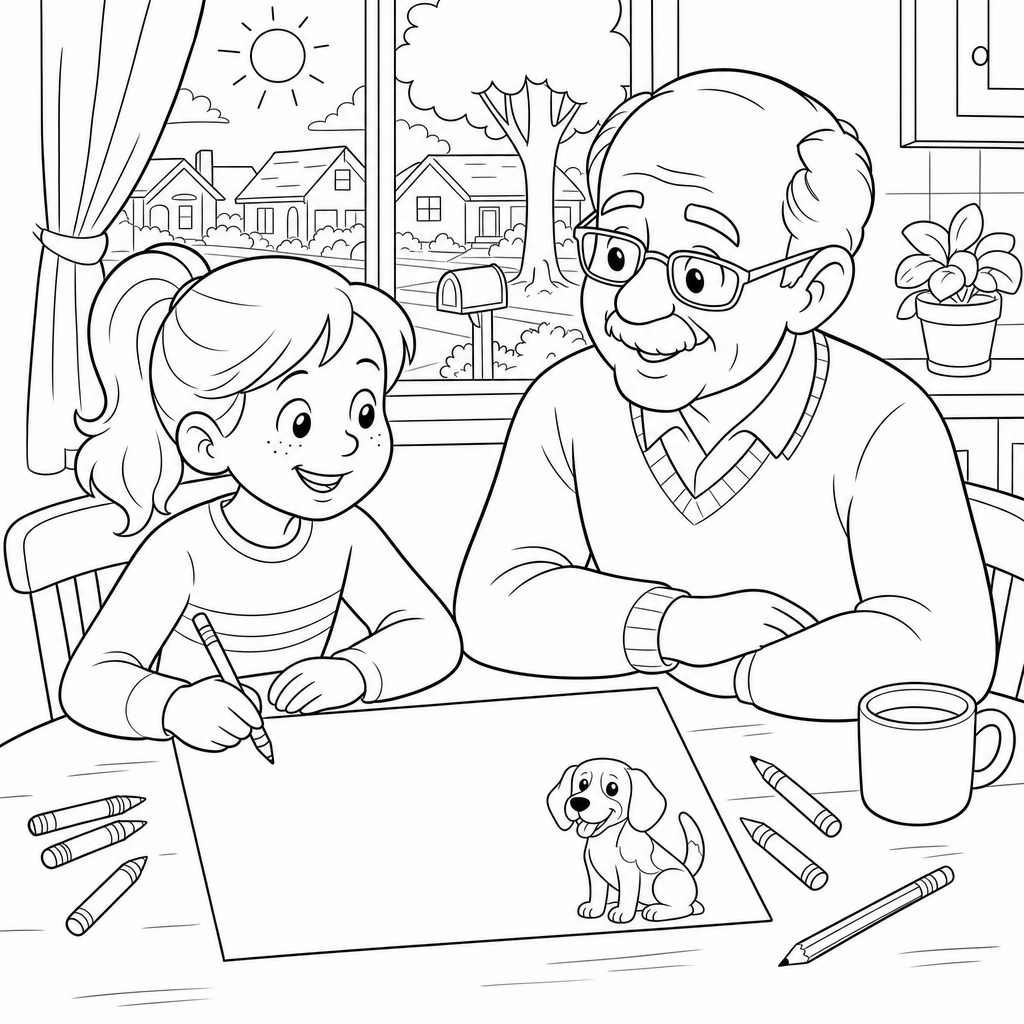
On Saturday morning, Maya saw Mr. Alvarez on the sidewalk. He looked sad and worried. His little beagle, Biscuit, had run out the front gate. Maya wanted to help her neighbor find him. "I can make a flyer," Maya said. "We can hang it up on Oak Street." Mr. Alvarez smiled a little. "Thank you, Maya. That is a kind idea," he said. They walked to his kitchen table and got out paper, markers, and tape. Mr. Alvarez found a clear photo of Biscuit sitting in the yard. Maya started a rough draft in pencil. She wrote about Biscuit's brown ears and white paws. She added the street name and Mr. Alvarez's phone number. When she finished, she read it out loud. Right away, she noticed some problems. A few names did not start with capital letters. Some sentences did not have end marks at all. One sentence asked a question, but it was missing a question mark. Another sentence sounded urgent, so it really needed an exclamation point. "We have to fix these mistakes before we print copies," Maya explained. "A flyer must look careful so people will trust it." Mr. Alvarez nodded and handed her a fresh sheet. Together, they checked every line. They circled each proper noun that needed a capital. They added a period, a question mark, and an exclamation point in the right spots. Soon the flyer looked neat and clear. Maya felt proud, and Mr. Alvarez felt hopeful that someone in the neighborhood would spot Biscuit and bring him home.
What this lesson checks
- Grammar usage: The passage says: "On Saturday morning, Maya saw Mr. Alvarez on the sidewalk." Why does the word Saturday start with a capital letter?
- Grammar usage: Maya's rough draft has this sentence: 'have you seen biscuit' Rewrite the sentence so it has correct capital letters and the right end mark.
- Grammar usage: Maya wants to add a sentence to the flyer that shows people should call right away. Which sentence has the correct capital letters and the correct end mark?
- Grammar usage: The passage says: "We can hang it up on Oak Street." Which choice shows the correct way to write the street name?
- Grammar usage: Maya's rough draft has this sentence from the flyer: 'on saturday my dog biscuit ran away from oak street' Rewrite the sentence so it has all the correct capital letters and the correct end mark. Then, in 2-4 sentences, explain WHY you made each change.