Grade 2 · Week 8Main idea
Why Bees Help the Garden
Students read a short nonfiction passage about how bees help a garden grow, then answer five questions about the main topic and paragraph focus, supported by teacher and homeschool guidance.
On screen - your kid, alone
- 1Day 1 - Meet the story
- 2Day 2 - Word work
- 3Day 3 - What it means
- 4Day 4 - Fix & re-read
- 5Day 5 - Show what you know
Offline - with you
Print the pages for offline work together; the answer key is for you.
Start by reading the passage aloud together, then ask your child, "What is this whole passage mostly about?" A strong answer names the big idea — that bees help gardens grow food — not just one small detail like tomatoes or pollen sticking to a bee. Next, go paragraph by paragraph and ask what each one focuses on: paragraph 1 introduces bees as garden helpers, paragraph 2 explains pollen, and paragraph 3 shows how flowers turn into fruits and vegetables. If your child gives a detail instead of the main idea, gently say, "That's one thing the passage says, but what is the whole paragraph about?" and have them point to a sentence that tells the big idea. If they are still stuck, reread just one paragraph and ask, "If you had to give this part a title in three words, what would you call it?" Wrap up by having your child explain in their own words why bees matter to a garden — that quick retell shows they really got the main idea.
Why Bees Help the Garden
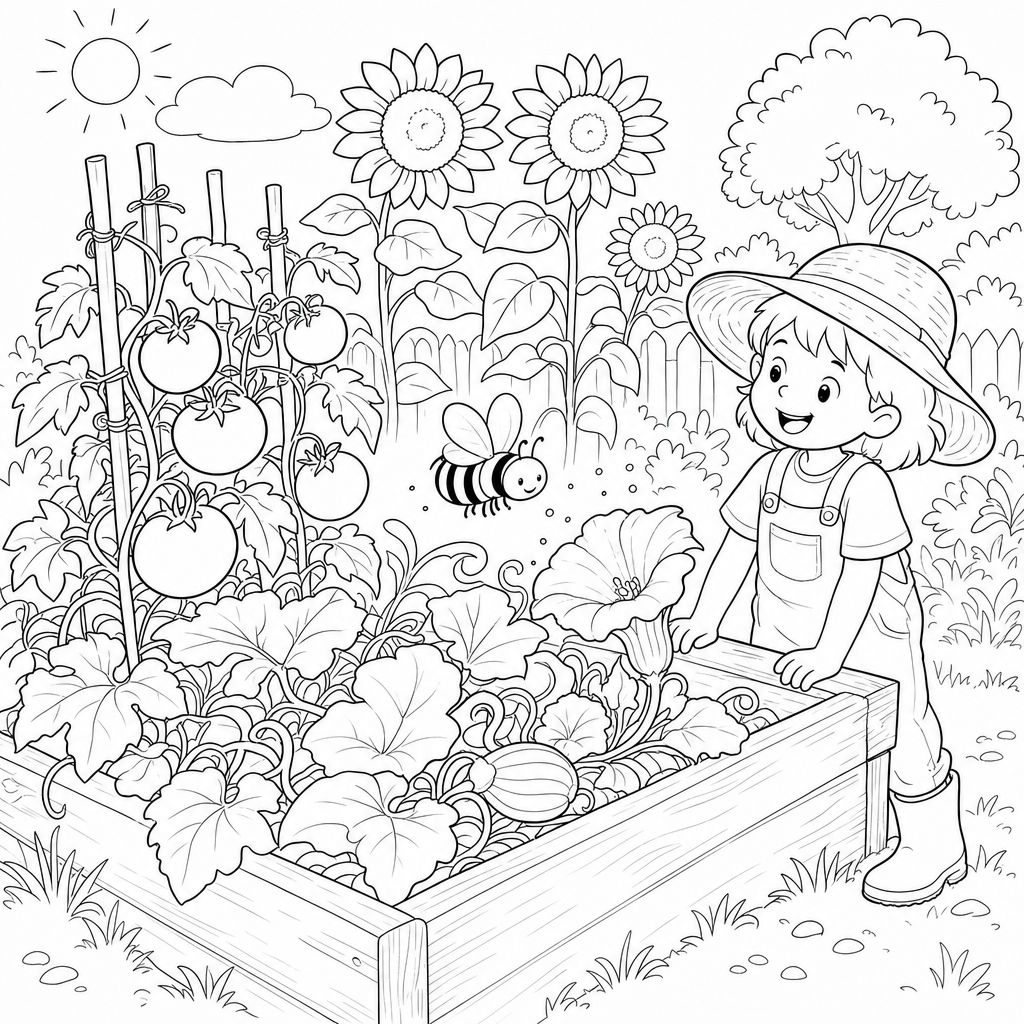
Bees are tiny helpers in a backyard garden. They buzz from plant to plant all day long. Without bees, many garden plants could not grow food for us to eat. Bees carry something special called pollen. Pollen is a yellow dust that flowers make. When a bee lands on a flower, pollen sticks to its body. Then the bee flies to the next flower and drops some pollen there. This helps the flower make seeds. After the flower gets pollen, something amazing happens. The flower slowly turns into a fruit or a vegetable. A tomato plant can grow round, red tomatoes. A pumpkin vine can grow big pumpkins. Thanks to busy bees, our gardens give us food to eat all summer long.
What this lesson checks
- Main idea: What is this passage mostly about?
- Supporting detail: What is pollen?
- Main idea: In your own words, what big idea is the writer trying to teach readers in this passage? Use one detail from the passage to explain your thinking.
- Main idea: Paragraph 2 begins, "Bees carry something special called pollen." What is paragraph 2 mostly about?
- Text evidence: Paragraph 3 tells what happens after a flower gets pollen. Find one sentence from paragraph 3 that shows what a flower turns into. Write it down.