Grade 2 · Extra practiceinformative paragraph
Meet Peanut Our Class Hamster
Students read a mentor informative paragraph about Peanut the classroom hamster, then answer four questions about paragraph structure and write their own short informative paragraph.
Offline - with you
Print the pages for offline work together; the answer key is for you.
Start by reading the paragraph about Peanut aloud together, then ask your child what the whole paragraph is mostly about — that answer is the topic sentence, the very first one. As you work through the questions, listen for your child to point to specific facts in the paragraph (what Peanut eats, where he sleeps, how to hold him) rather than guessing or sharing opinions about hamsters in general. A strong answer on the writing prompt will have three parts: a topic sentence that names the object or routine, two or more true facts about it, and a closing sentence that wraps things up. You can use the starter "Our class ___ is ___." to help your child begin, and remind them this is teaching writing, not a story, so we leave out characters talking and made-up adventures. If your child gets stuck, try walking around the house and picking something real to describe, like the kitchen timer or the morning routine, and have them tell you three true things about it before writing anything down. Celebrate clear, true sentences over fancy ones — second graders grow as writers when they feel proud of explaining something well.
Meet Peanut Our Class Hamster
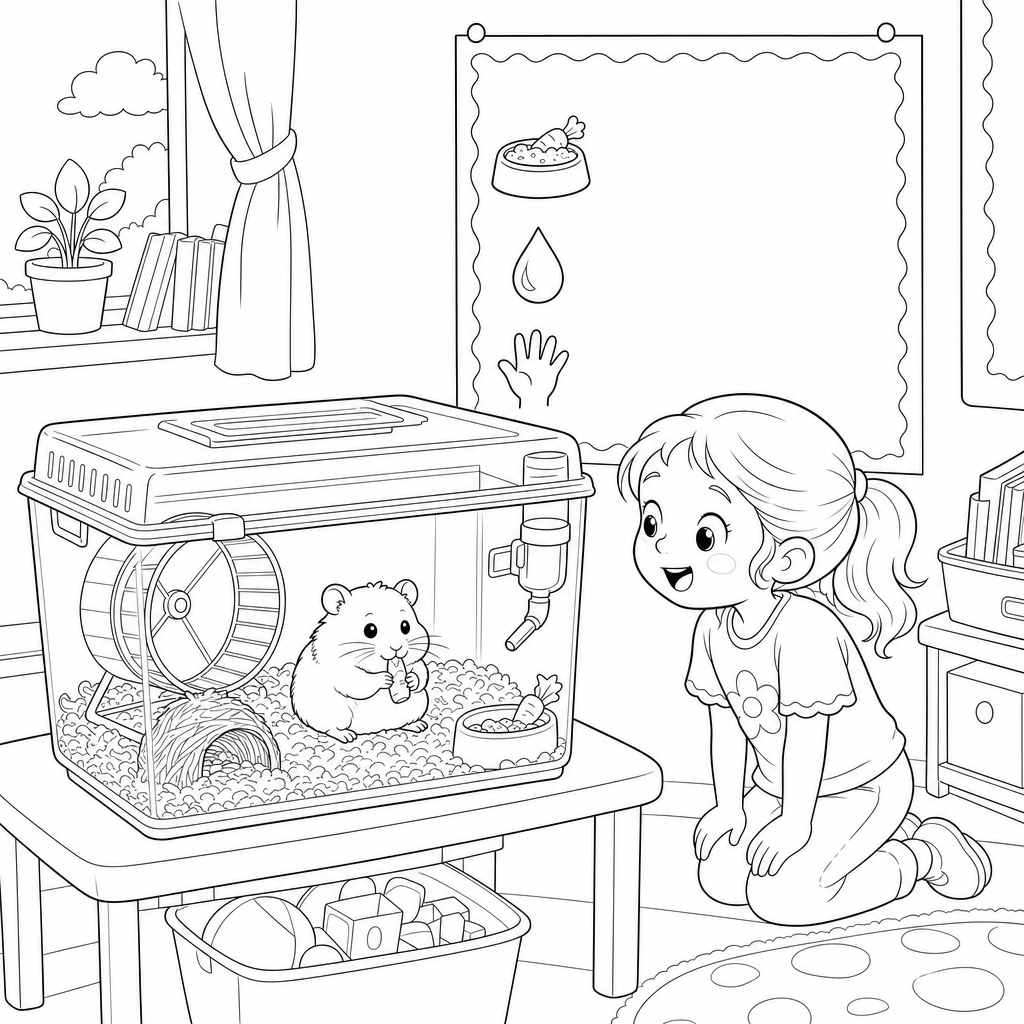
Peanut is our classroom hamster, and he needs kind care each day. He lives in a big cage with soft wood shavings on the bottom. He eats hamster pellets, small bits of carrot, and tiny seeds. Peanut sleeps in a cozy nest during the day. At night, he runs fast on his wheel. We give him fresh water every morning in a clean bottle. We clean his cage one time each week so it stays nice. When we hold Peanut, we sit on the rug and use gentle hands. We must be careful and slow so he feels safe. We talk in soft voices near his cage. We never tap on the glass or wake him up. Peanut is a small pet, but he brings us big smiles. If you follow these steps, you can help take care of Peanut too!
What this lesson checks
- Writing plan: Read the paragraph about Peanut again. Now write 2 or 3 more sentences that could be added to the paragraph BEFORE the closing sentence. Your new sentences should teach one more fact about how to care for Peanut, like how to feed him or how to keep his cage clean. Use the same teaching voice as the model.
- Writing plan: Now it is your turn to teach! Write a short informative paragraph (3 or 4 sentences) about something in YOUR classroom, like the class fish, the reading corner, or the morning job chart. Start with a topic sentence that tells what you are teaching about. Then give 2 facts that help a kindergarten visitor understand it. You can begin with this starter: 'Our class ___ is ___.'
- Writing plan: The paragraph about Peanut has a topic sentence, facts, and a closing sentence. But it is missing one important fact: WHEN we feed Peanut. Write ONE sentence that could be added to the paragraph to teach kindergarten visitors when to feed Peanut. Your sentence should sound like the other teaching sentences in the paragraph.
- Writing plan: A student wrote this weak draft for a paragraph about Peanut: 'Peanut is the best hamster ever. He is so cool.' These sentences tell an opinion, but they do not TEACH facts like the model paragraph does. Rewrite this draft as 2 informative sentences. Your sentences should start with a clear topic sentence and then give ONE real fact about how to care for Peanut, just like the model paragraph teaches facts.